
Ellis Jung · 2 October 2026
The Hidden Connections Between Brand Storytelling and Technical SEO Implementation
Brand storytelling builds sequences of events, characters, and conflicts that guide audiences through emotional progressions while technical SEO manages the underlying code, schemas, and crawl directives that determine how search engines access and interpret that same content. Observers note that these areas intersect when narrative structures influence decisions about information hierarchy, internal linking patterns, and markup choices that affect indexation and visibility.
Narrative Structures and Site Architecture
Content creators organize brand stories into acts or chapters that map directly onto URL hierarchies and breadcrumb trails, creating logical paths that search engine crawlers follow more efficiently than flat site maps. Research indicates that sites using sequential content flows experience improved crawl depth because each story segment links to the next through contextual anchors rather than generic menus alone. Experts have observed that this approach reduces orphan pages while maintaining thematic consistency across the domain.
Structured Data for Story Elements
Technical teams implement schema markup such as Article, HowTo, and FAQ types to highlight key moments within brand narratives, allowing rich results that display timelines or key events directly in search listings. Data shows these enhancements increase click-through rates because engines can extract and present story components without additional scraping. One study revealed that pages combining narrative content with precise JSON-LD markup saw measurable gains in featured snippet appearances during algorithm evaluations conducted through late 2025.
Engagement Signals and Technical Performance
Compelling brand stories extend dwell time and lower bounce rates, which feed into ranking systems that evaluate user interaction alongside core web vitals. According to findings from Pew Research Center reports on digital engagement, narrative-driven pages retain visitors longer when load times remain under three seconds. Technical implementations such as lazy-loaded story images and pre-rendered content blocks therefore support both the emotional arc and the performance metrics that influence crawl budget allocation.
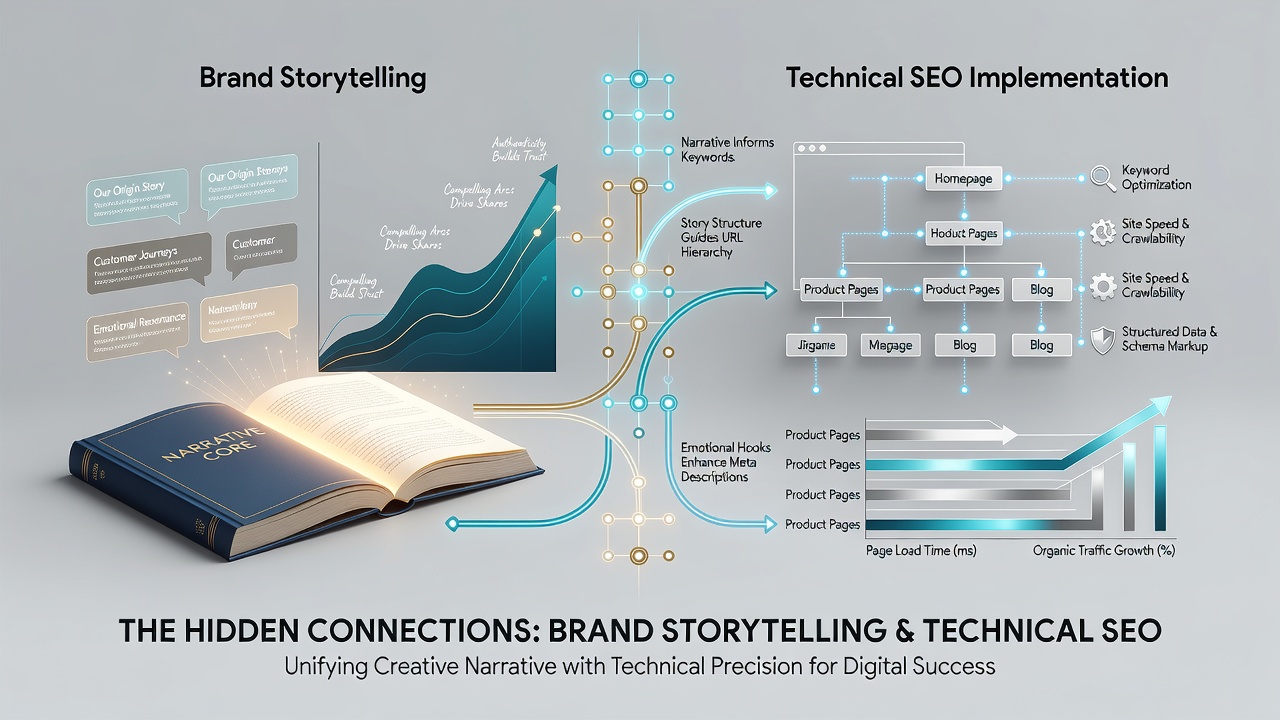
Internal linking strategies that mirror plot progression send authority signals through the site in patterns that resemble natural user journeys rather than arbitrary keyword clusters. Observers have documented cases where brands aligned chapter-style content with topic clusters, resulting in stronger topical authority scores reported by third-party tools. These connections become visible during log file analysis when repeated crawl patterns follow the same narrative sequence.
Schema and Content Hierarchy in Practice
Developers apply Organization and WebPage schemas alongside story-specific markup to clarify authorship and publication timelines, which helps engines distinguish original brand narratives from syndicated versions. Research from European digital market studies indicates that consistent schema usage across story series improves entity recognition and reduces duplicate content flags. Those who maintain these implementations report steadier indexing rates even after site migrations or template updates.
Technical audits now routinely examine how story endpoints align with canonical tags and hreflang attributes, ensuring that localized versions preserve narrative integrity without fragmenting signals. Data from industry monitoring through October 2026 shows that sites neglecting this alignment encounter indexing gaps in secondary markets where story translations appear.
Conclusion
The interplay between brand storytelling and technical SEO implementation rests on shared requirements for logical progression, clear hierarchy, and measurable engagement. When narrative elements guide architecture and markup choices, both creative and technical teams achieve outcomes that support discovery and retention simultaneously. Continued observation of these patterns reveals ongoing opportunities for refinement as search systems evolve.