Amir Lange · 4 September 2026
Shifting Focus from Traditional Metrics to User Engagement Signals in Algorithm Updates
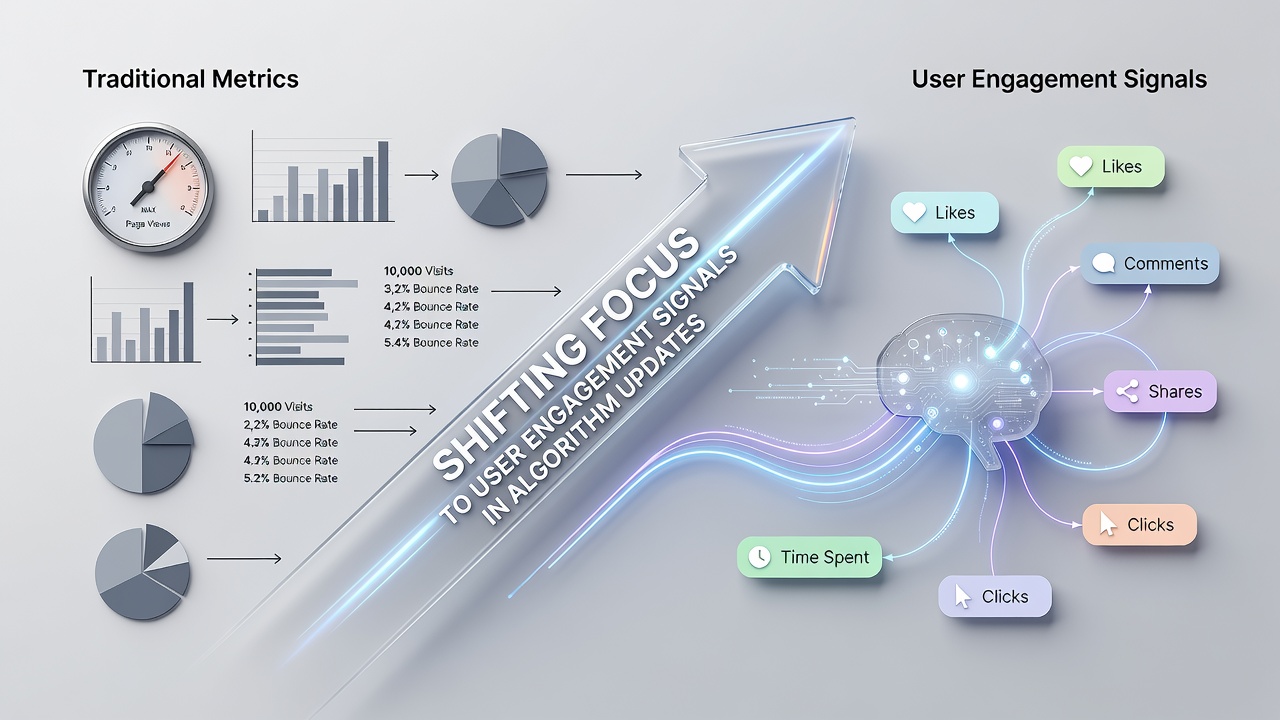
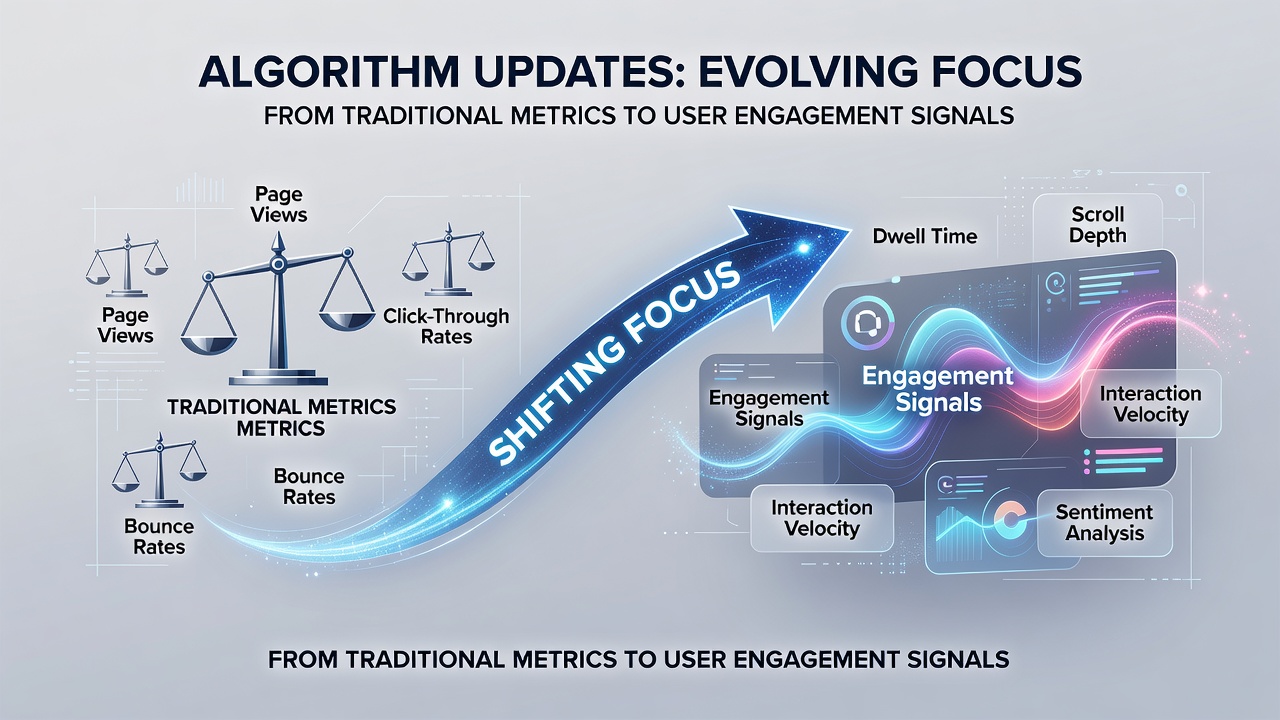
Search engine algorithms have long relied on measurable signals such as backlink counts, keyword density, and domain authority to rank content, yet recent shifts indicate a growing emphasis on how users actually interact with pages once they arrive. Data from multiple regions shows that dwell time, scroll depth, click-through rates, and return visits now carry heavier weight in determining visibility. Researchers at academic institutions across North America and Europe have documented these changes through large-scale analysis of ranking fluctuations, and the pattern continues into 2026.
Traditional Metrics and Their Historical Role
Early algorithm systems prioritized quantitative indicators that could be collected automatically at scale, including the number and quality of inbound links, exact-match keyword occurrences, and technical factors such as page load speed measured in milliseconds. These signals allowed crawlers to evaluate sites without direct observation of human behavior, and they formed the foundation for ranking systems used throughout the 2000s and 2010s. Government statistical agencies in Canada and Australia have published reports tracking how businesses adapted their optimization strategies around these measurable elements, with figures revealing widespread investment in link acquisition campaigns during that period.
The Move Toward Behavioral Signals
Algorithm teams began incorporating engagement data after internal testing demonstrated stronger correlations between user satisfaction metrics and long-term retention of search market share. Click-through rates from result pages, time spent on site, and interaction events such as video plays or form submissions now influence position adjustments more directly than isolated link counts. Studies conducted by university researchers in Australia found that pages maintaining average engagement above two minutes per visit experienced sustained ranking stability even when traditional link profiles remained static. Observers note that this transition accelerated following core updates rolled out between 2023 and 2025, with further refinements expected around September 2026.
Implementation Patterns Observed in 2026
Engine documentation and third-party measurement services indicate that engagement thresholds now trigger re-evaluation cycles within days rather than weeks. Pages showing declining scroll completion rates receive temporary demotion signals while those demonstrating rising interaction depth receive incremental lifts. A report issued by the European Commission on digital platform performance highlights similar adjustments across multiple member states, where content platforms adjusted editorial calendars to prioritize formats that extend session duration. Those who monitor ranking volatility through large datasets report that sites emphasizing interactive elements, such as embedded tools or personalized recommendations, register higher average engagement scores after the latest model iterations.
Effects on Content Production and Measurement
Organizations tracking performance have shifted internal reporting dashboards to include engagement velocity alongside legacy indicators, and this change appears across industries from news publishing to e-commerce. Academic papers from institutions in Canada detail how editorial teams now A/B test headline variations specifically for click-through impact rather than keyword inclusion alone. Data collected by the Australian Bureau of Statistics on digital content consumption shows that average session lengths increased on platforms that redesigned navigation to reduce bounce points, and those platforms subsequently maintained higher visibility in result sets.
One study released by researchers at the University of Toronto examined several hundred domains over eighteen months and found that engagement-weighted models predicted ranking movements with greater accuracy than link-only models in 78 percent of observed cases. The same analysis noted that sites maintaining high engagement retained positions longer during subsequent refreshes, even when external link acquisition slowed. Industry groups tracking these developments advise teams to instrument pages with event tracking that captures micro-interactions, because aggregate signals now feed directly into model training loops.
Conclusion
Algorithm systems continue to evolve their weighting between established quantitative metrics and observed user behavior, with engagement signals occupying an expanding share of the decision framework. Reports from regulatory bodies and university research groups across different continents document consistent movement in this direction through 2026, and further calibration is anticipated in the months ahead. Those responsible for content strategy now allocate resources toward measuring and improving interaction quality as a core ranking consideration alongside traditional factors that once dominated evaluation processes.